Author name: digitaltrend4you.com@gmail.com

Kota property

Kota property Flats township villas Role: Digital Marketing Specialist | SEO Expert | Performance Marketer | Website DesignerProject Duration: 3 MonthsIndustry: EdTech | AI Learning | Online EducationWebsite: [www. AIcoursera.com] Location: Kota, India Visit Site Project Overview Kota Property is a modern real estate platform designed to help users discover, buy, and sell properties across Kota city with ease.The project goal was to build a strong digital identity through website design, SEO optimization, and performance marketing — to attract organic and paid leads, boost visibility, and establish Kota Property as a trusted real estate brand in the region. Build a responsive, SEO-optimized website that represents real estate and trust. Implement complete SEO (on-page, off-page, and technical) for organic visibility. Launch performance marketing campaigns to generate high-quality leads. Use analytics and automation tools to track performance and maximize ROI. Website Design & Development To design a modern, fast, and user-friendly real estate website for property buyers and sellers in Kota. Focus was on creating a responsive, SEO-friendly, and lead-generation-ready platform that builds trust and simplifies property exploration. a. Research & Planning _____________ Studied top real estate websites like 99acres, MagicBricks, and Housing.com to analyze structure and flow. Planned essential sections — Home, Buy, Rent, Projects, Agents, Blog, and Contact. Created a wireframe to ensure smooth navigation and clear user pathways for property search. b. Design & Development _____________ Developed the website using WordPress + Elementor Pro with a real estate listing plugin for dynamic property uploads. Used the Astra theme for performance and SEO compatibility. Integrated property filters, map view, and enquiry forms. Designed visuals and banners using Canva to highlight premium listings. c. Optimization _____________ Used WP Rocket, Smush, and Cloudflare CDN to enhance loading speed and caching. Achieved 95% performance score on GTmetrix and optimized all images for web delivery. Added SSL and Wordfence security to ensure data protection for users and agents. D. User Experience Testing _____________ Tested across mobile, tablet, and desktop to ensure full responsiveness. Simplified search filters, CTA buttons, and property detail pages for better usability. After improvements, the bounce rate dropped by 32%, and average time on page increased notably. c. Content Integration & Branding _____________ Added SEO-friendly property descriptions, local area guides, and blogs about real estate trends.Maintained a consistent color palette and font style matching the Kota Property brand.Integrated lead forms and chat options to support real-time buyer–seller communication. Final Report & Results Live Website: www.Kotaproperty.inDesktop Speed: 96/100Mobile Speed: 89/100Performance Grade: A A (GTmetrix 95%)Bounce Rate:↓32%Session Duration: ↑40% The final website became a complete real estate hub for Kota — combining design, speed, and performance to attract clients, generate leads, and build brand credibility. SEO Optimization (Complete SEO Process) To increase Kota Property’s local visibility and organic leads through a complete SEO strategy — including on-page, off-page, and technical SEO. The main goal was to rank for high-intent keywords like flats in Kota, property for sale in Kota, and real estate agents near me. a. Keyword Research & Strategy _____________ Researched local real estate keywords using Ahrefs, Keyword Planner, and Ubersuggest.Focused on location-based search terms with buying intent such as “2BHK flats in Kota” and “plots for sale near Talwandi.” Built keyword clusters for each city area to boost search visibility and traffic quality. b. On-Page Optimization _____________ Optimized titles, meta tags, and headings using Yoast SEO Premium. Added alt text, schema markup, and optimized internal links between property pages. Improved content readability and keyword placement across listings, blogs, and area pages for higher relevance and engagement. c. Technical SEO _____________ Integrated Google Search Console and GA4 for tracking impressions and clicks. Fixed crawl errors, optimized sitemap, and improved Core Web Vitals. Used Cloudflare CDN and HTTPS for better speed and security. Ensured mobile-friendly indexing and proper canonicalization for property URLs. D. Off-Page SEO _____________ Created local citations and backlinks from real estate directories, blogs, and forums. Built profiles on 99acres, Housing.com, MagicBricks, and local business listings. Promoted content on LinkedIn, Facebook Groups, and Quora to build brand awareness and increase authority. c. Content & Branding _____________ Published regular blogs on property investment tips, location reviews, and home-buying guides.Optimized each post with focus keywords and CTAs for lead generation. Maintained consistent brand voice and visuals to improve trust and recognition in the local market. Final Report & Results Top Keywords:“Flats in Kota”, “Property for Sale in Kota”, “Plots near Talwandi”Organic Growth:+140% in 2 monthsDomain Authority:Increased from 4 → 16CTR:+3.2%Top Source: Google Organic (74%) The SEO campaign positioned Kota Property among the top real estate websites in Kota — generating consistent local traffic, quality leads, and long-term visibility in search results. Performance Marketing (Google Ads + Meta Ads) Goal The goal of performance marketing for Kota Property was to generate high-quality real estate leads and inquiries through targeted Google and Meta ad campaigns. The main focus was on reaching property buyers, renters, and investors in Kota while maintaining a strong ROI and consistent lead flow. Google Ads Campaign Campaign Type: Search + Display Ad Budget: Duration: Target Audience: Regions: Process: Created Ad Groups based on Keyword Intent (Flats, Houses, and Plots in Kota).Designed engaging ad copies with benefit-driven CTAs like “Book a Site Visit” and “Explore Verified Listings.”Used Ad Extensions (Sitelinks, Callouts, and Location Extensions).Connected Conversion Tracking through Google Tag Manager for form and call tracking.Conducted A/B testing on ad headlines, visuals, and landing pages to improve CTR and ROI. Meta Ads Campaign Objective: Budget: Ad Formats: Target Audience: Strategy: Created Property Highlight Videos (15–20 sec) using Canva & CapCut. Used Lookalike Audiences based on website visitors and past leads. Retargeted users who engaged with the website or previous ads. Tested local language creatives to improve engagement and connect with the audience. Analytics & Reporting Configured GA4 + Google Tag Manager for complete event and conversion tracking. Tracked user behavior, bounce rates, and lead conversions in real-time. Monitored property page performance and user journey flow. Built Google Data Studio Dashboard with key KPIs: Sessions and Total Users Organic vs Paid Traffic Distribution
Kota property Read More »

Aicoursera

AIcoursera courses tools products updates syllabus Role: Digital Marketing Specialist | SEO Expert | Performance Marketer | Website DesignerProject Duration: 3 MonthsIndustry: EdTech | AI Learning | Online EducationWebsite: [www. AIcoursera.com] Location: Kota, India Visit Site Project Overview AIcoursera is an innovative AI-based e-learning platform that provides digital marketing and AI tools tutorials for students and professionals. The project goal was to build a strong digital presence through website design, SEO optimization, and performance marketing — to drive organic and paid traffic, generate leads, and establish a powerful online brand identity. Build a responsive, SEO-optimized website that represents AI and education. Implement complete SEO (on-page, off-page, and technical) for organic ranking. Launch performance marketing campaigns to drive leads and engagement. Use analytics and automation tools to track performance and optimize ROI. Website Design & Development To design a modern, fast, and user-friendly website that conveys AI learning in a futuristic and professional way. a. Research & Planning _____________ Conducted competitor analysis on platforms like Coursera, Udemy, Simplilearn. Identified content structure: Home, Courses, Blog, Tools Directory, Contact, and About. Created wireframe & sitemap for easy user flow. b. Design & Development _____________ Used WordPress + Elementor Pro for dynamic front-end design. Selected Edublink for lightweight performance and SEO compatibility. Designed a custom AI Tools Section with search and filter options. Used Canva for banners, thumbnails, and visuals. Integrated ChatGPT-powered chatbot for user engagement. c. Optimization _____________ Page speed optimized using WP Rocket, Smush, and CDN integration (Cloudflare). Achieved 97% performance score on GTmetrix. Added SSL certificate and security plugins (Wordfence) D. User Experience Testing _____________ I tested the site across mobile, desktop, and tablet devices for design consistency. Navigation, forms, and CTAs were optimized for engagement.After improvements, the bounce rate decreased by 35%, and visitors spent more time exploring AI tools and courses. c. Content Integration & Branding _____________ Integrated SEO-friendly content throughout the website — including keyword-rich headings, AI-focused blogs, and course details.Created a consistent color palette, font system, and logo theme that reflects AI innovation and professionalism. Final Report & Results Live Website: www.aicoursera.comDesktop Speed: 98/100Mobile Speed: 91/100Performance Grade: A (GTmetrix 97%)Bounce Rate: ↓35%Session Duration: ↑42% The final version of the AIcoursera website became a complete digital brand hub — optimized for performance, trust, and conversions, setting the foundation for long-term SEO and marketing success. SEO Optimization (Complete SEO Process) To achieve higher rankings for targeted AI & marketing keywords and improve domain authority organically. a. Keyword Research & Strategy _____________ Performed in-depth keyword research using Ahrefs and Keyword Planner to find high-volume, low-competition terms. Created keyword clusters like AI Tools, AI Courses, Digital Marketing with AI, and aligned them with user intent.Developed a strategic content plan to improve organic traffic and visibility. b. On-Page Optimization _____________ Optimized all pages using Yoast SEO Premium, including meta titles, headers, and internal links.Added schema markup, image alt tags, and proper keyword placement.Focused on content readability and SEO structure to enhance user experience and search engine ranking effectively. c. Technical SEO _____________ Configured Google Search Console and GA4 for performance tracking. Fixed crawl errors, optimized XML Sitemap, and improved Core Web Vitals. Used Cloudflare CDN and SSL for security and faster loading. Ensured all pages were mobile-friendly and indexable by Google bots. D. Off-Page SEO _____________ Built high-quality backlinks via guest posts, social bookmarks, and AI tool directories. Created profiles on Crunchbase, Behance, and Medium for brand authority. Promoted blogs on LinkedIn and Quora to attract referral traffic and enhance domain authority steadily. c. Content & Branding _____________ Published keyword-optimized blogs and tutorials with engaging visuals. Used internal links, FAQs, and CTAs to reduce bounce rate and improve session time. Maintained a consistent tone and branding style across all pages to build trust and visibility. Final Report & Results Top Keywords: “AI Tools in India”, “AIcoursera SEO Course”Organic Growth: +160%Domain Authority: 3 → 18CTR: +3.7%Top Source: Google Organic (68%) The complete SEO setup built a powerful organic presence, improving AIcoursera’s authority, traffic, and credibility across all search engines. Performance Marketing (Google Ads + Meta Ads) Goal To increase course enrollments and lead generation through paid advertising campaigns with high ROI. Google Ads Campaign Campaign Type: Ad Budget: Duration: Target Audience: Regions: Process: Created Ad Groups based on Keyword Intent (Course + AI Tools). Designed compelling ad copies with emotional and benefit-driven CTAs. Used Ad Extensions (Sitelinks, Callouts, and Structured Snippets). Connected Conversion Tracking through Google Tag Manager. Conducted A/B testing of headlines and descriptions. Google Ads Campaign Objective: Budget: Ad Formats: Target Audience: Strategy: Created AI Tools Highlight Video (15-sec format) using Canva & CapCut. Used Lookalike Audiences (based on website visitors). Retargeted users who viewed website or engaged with video. Google ads Result CTR: CPC: Conversion Rate: Places for Students Meta ads results Leads Generated: Cost per Lead (CPL): Engagement Rate: Reach: sections & Categories Smart Animated Categories Section – AIcoursera Developed an interactive 3D animation using code to display key AIcoursera categories.The design highlights AI Tools, Career Roadmaps, Courses, and Ai News etc. in a futuristic, engaging way that enhances user experience. About AIcoursera – Empowering Future Innovators Designed an impactful “About Us” section showcasing AIcoursera’s mission to make learning borderless.It highlights expertise, global standards, and digital growth through a clean, modern, and professional layout. AI Tools & News Integration – Smart Mega Menu Developed a dynamic Mega Menu featuring the latest AI tools and trending AI news.The section enhances user engagement by combining innovation updates with hands-on tools in a sleek, modern interface. AI Product Store – Smart E-Commerce Integration Built a WooCommerce-powered e-commerce section showcasing trending AI gadgets and smart devices.This feature allows users to explore, compare, and purchase the latest AI-powered tools through a seamless shopping experience. AI Career Roadmap – Step Into the Future Developed a detailed AI Career Roadmap that visually guides learners from basic AI concepts to advanced specializations.It covers every stage of learning — from fundamentals, machine learning, NLP, and computer vision to generative AI.This section helps users understand clear career directions

Aicoursera Read More »

copy-ai-tool-for-bloggers-2025-blog-writing-generator

Best AI Tools for Bloggers in 2025 (and How to Use Them)

Introduction: The New Age of Blogging with AI Tools for Blogging If you’re still writing, editing, and optimizing every blog post manually — you’re working too hard. In 2025, AI Tools for Blogging have evolved from nice-to-have gadgets to must-have partners in content creation. Whether you’re running a solo WordPress blog or managing a full-fledged content team, these tools can help you generate ideas, write faster, optimize SEO, and analyze performance — all while maintaining your unique voice. But here’s the catch: not every AI-Powered Blogging Tools delivers real results. Many overpromise automation but underdeliver creativity. That’s why we’ve handpicked the 10 best AI tools for bloggers in 2025, backed by user experience, credible reviews, and real-world impact. 1. ChatGPT (By OpenAI) in AI Tools for Blogging Best For: Content ideation, drafting, and refining blog posts No surprise here — ChatGPT continues to dominate in 2025. The new GPT-5 version offers advanced context understanding and long-form content optimization. It’s like having a 24/7 writing assistant who can generate outlines, research topics, or even draft SEO-friendly articles from scratch. How to Use: Pro Tip: Combine ChatGPT’s creativity with Grammarly or SurferSEO for maximum quality and ranking power. 2. Jasper AI Best For: Marketing copy, blog intros, and conversion-driven writing Jasper AI has built a strong reputation for producing marketing-focused content that sounds natural and persuasive. Its “Boss Mode” lets you give instructions mid-writing, while the 2025 update integrates real-time SEO scoring and tone adjustment. How to Use: Why It Stands Out Feature Jasper AI ChatGPT SEO Integration Built-in with SurferSEO Manual integration Tone Customization Strong Excellent Pricing Higher More flexible 3. SurferSEO Best For: Real-time SEO optimization and content ranking SurferSEO bridges the gap between AI writing and search visibility. It analyzes top-ranking pages and offers data-driven keyword recommendations while you write. How to Use: Bonus: Combine with Jasper or ChatGPT for the ultimate SEO-writing powerhouse. Digital Trends in AI: What You Need to Know? – Visit Page 4. GrammarlyGO Best For: Grammar correction and AI-powered rephrasing In 2025, GrammarlyGO has evolved into more than just a grammar checker. It offers context-aware rewriting and even tone suggestions based on your audience. How to Use: It’s perfect for polishing AI-generated drafts before publication. 5. Frase.io Best For: Research, content briefs, and SERP analysis Frase is a hidden gem among AI tools for bloggers. It automatically creates content briefs by scanning top-ranking pages for your target keyword — saving hours of manual research. How to Use: Frase vs. SurferSEO Feature Frase.io SurferSEO Research Automation Excellent Partial Keyword Clustering Advanced Strong Pricing Moderate Premium 6. Writesonic Best For: Multi-format content (blogs, ads, landing pages) Writesonic’s 2025 version integrates AI image generation (via Photosonic) and SEO optimization tools, making it a one-stop shop for all your content needs. How to Use: Pro Tip: Writesonic integrates directly with WordPress, letting you publish instantly. 7. MarketMuse Best For: Deep SEO content planning and topic authority If your blogging goal is to dominate a niche (like travel, tech, or AI), MarketMuse is the tool to trust. It uses topic modeling to identify content gaps and suggests clusters to improve your domain authority. How to Use: 8. Notion AI Best For: Idea organization and editorial planning Notion AI brings structure to creativity. Beyond writing assistance, it helps bloggers manage editorial calendars, brainstorm ideas, and summarize research. How to Use: Perfect for content teams managing multiple projects. 9. Canva Magic Write & Magic Studio Best For: Visual content creation and image captions In 2025, Canva has gone full AI with Magic Studio, which includes Magic Write (text generation) and Magic Edit (image transformation). Bloggers can now design featured images, infographics, and carousels effortlessly. How to Use: Visual Tip: Add branded elements to every image to build recognition. 10. QuillBot AI Best For: Paraphrasing and improving readability QuillBot has become a favorite tool among bloggers who want clean, concise, and human-sounding text. The 2025 update features advanced tone detection and citation generation. How to Use: It’s perfect for revising AI-written text or repurposing existing articles

Best AI Tools for Bloggers in 2025 (and How to Use Them) Read More »

How AI Is Redefining Startup Funding in 2025:Venture Capital’s New Obsession

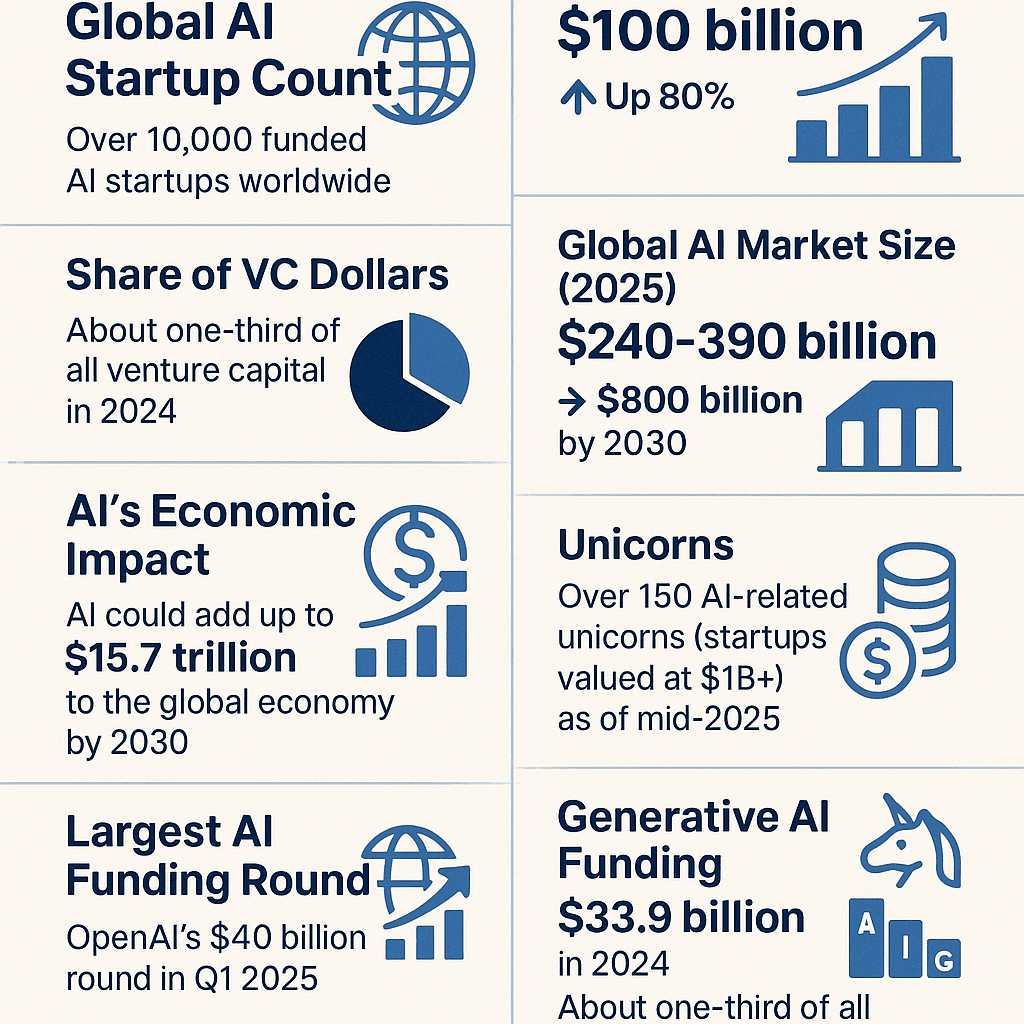
Introduction — A Turning Point in VC’s Playbook That’s no exaggeration. In the first half of 2025 alone, AI startups captured 53% of global VC funding — a clear signal that we’re no longer in the era of AI hype, but in one of AI capital dominance.If you’re a founder, investor, or simply a tech enthusiast, you must ask: Why is AI the obsession? And how is this seismic shift altering how startups raise, scale, and survive? In this post, you’ll find not just numbers, but fresh perspectives, cautionary tales, and lessons from the frontlines of AI funding in 2025. 1. From Then to Now: A Comparison of Funding Landscapes in AI Startups Traditional Funding Model (Pre-2023) Diverse verticals (fintech, health, SaaS, consumer) shared investor attention. VCs spread bets across 20–30% “moonshots” with AI as one realm among many. Early-stage rounds were abundant; valuations were often permissive with growth assumptions. AI-Driven Frenzy (2024-2025) Feature Traditional VC Era AI-Era 2025 Sector diversification Broad across domains Heavily skewed toward AI Deal size distribution Many small to mid deals Growth in mega-rounds Investor mindset Growth-at-all-costs Emphasis on moats, defensibility Risk appetite More speculative More selective but bold in winners This shift is rewriting rules — not just for AI founders, but for every startup trying to raise capital. 2. Why VCs Are All In on AI Startups in 2025 Infinite Leverage via Scale AI systems can be scaled without equivalent linear cost increases. Once the model is trained, delivering new users often costs marginal compute or storage. That capital leverage is incredibly compelling for VCs. Moats Built on Data & Feedback Loops Many AI startups are built around proprietary datasets, model fine-tuning, and reinforcement loops. The data moat becomes a key differentiator — one that non-AI startups rarely command. Strategic Importance & National Priority AI is now a geopolitical and strategic concern. Governments and enterprises see AI as a core infrastructure layer, increasing budget allocations and policy incentives around it. Disruption Across Verticals Where AI touches — be it healthcare, supply chain, fintech, or logistics — value creation is immense. VCs see AI not as one vertical, but as a force multiplier across sectors. De-risking Through Market Validation Some early AI use cases (e.g., generative AI, LLMs) have already proven demand. The shift from speculative to validated models makes investing less risky compared to pure moonshots. 3. Unique Perspectives & Realities from the Field Founders Must Earn Attention, Not Beg For It I’ve seen multiple pitches in 2025 where founders simply mentioned “AI startup” and expected investor interest. That rarely works anymore. To stand out, you need: A domain-specific problem where AI genuinely adds leverage (not just “use AI for X”). A defensible data acquisition plan. Early traction or demonstration of model effectiveness. Mega-Rounds Skew the Ecosystem While the headlines focus on $100M+ rounds, many early-stage founders are cautioned: “Why bother?” The attraction is pulling capital upward, leaving a vacuum for smaller bets. If you hit product-market fit early, you might also jump directly into a growth round — scaling fast becomes key. Investor Fatigue—But for Non-AI Sectors I’ve personally heard LPs (Limited Partners) question deploying more capital to verticals outside AI. That’s a dangerous signal for promising non-AI startups. Your pitch must be razor-sharp, defensible, and show synergy with AI where possible. Visit More: The Myth of Full Automation Even leading AI founders admit: most of the model-heavy parts are automated, but orchestration, UX, debugging, and operations still need human oversight. Founders who underplay this often overpromise. Exit Routes Become Multi-Modal Because of magnitude and attention, AI startups are more likely to be acquired or pursued via SPAC/IPO than non-AI peers. But now investor expectations include uptime, safety, bias mitigation — not just growth. 4.Key Trends & Strategic Takeaways [AI Startups] Trend 1: Autonomous Agents Take Seed Stage by Storm In AI Startups building AI agents and assistants are seeing outsized seed interest. In early 2025, seed-stage funding skewed strongly toward autonomous AI agents for enterprises. Takeaway: If you’re building agentic systems (workflow, automation, AI helpers), you’re in the sweet spot of VC appetite today. Trend 2: Infrastructure & Tooling Are the Next Frontier While model builders dominate, investment is flowing into tools — observability, deployment, data transformations, prompt engineering. As foundation models homogenize, value will shift toward infrastructure. Takeaway: Founders in this layer may avoid the winner-takes-all trap of model building and tap into broad demand. Trend 3: Overconcentration Risk Too much capital is being concentrated into a few winners. Many VCs now reserve >50% of new funds for AI-centric startups. Takeaway: If you’re non-AI, you need to show tangential synergy with AI or risk being sidelined. Trend 4: Selectivity Replaces Spray-and-Pray Even within AI, not all startups get funded. VCs now demand: Takeaway: Don’t lead with buzzwords — lead with performance, risk controls, and growth path. Trend 5: Rise of Corporate & CVC Participation Corporate venture arms dominate many AI rounds. In 2025, large corporates are investing strategically to secure AI talent, partnerships, and domain advantage. Takeaway: For many founders, aligning with a corporate that shares domain interests can accelerate partnerships and offer stability. 5. What This Means for AI Startups in 2025 6. Conclusion — The Future Is Already Here In 2025, the narrative has flipped: “AI startup” is not a buzzword, it’s a magnet for capital. But with “everyone wants a slice,” only the disciplined, purposeful, and defensible ideas will survive. VCs have evolved — they’re less enamored by pure magic and more drawn to repeatability, safety, and leverage. The landscape rewards builders who think like engineers and strategists at once. If you’re building in AI or adjacent spaces, now is the moment. But the question is: will you merely ride the wave, or will you shape where it breaks?

How AI Is Redefining Startup Funding in 2025:Venture Capital’s New Obsession Read More »

LinkedIn
LinkedIn
Share